
5.1K
Downloads
51
Episodes
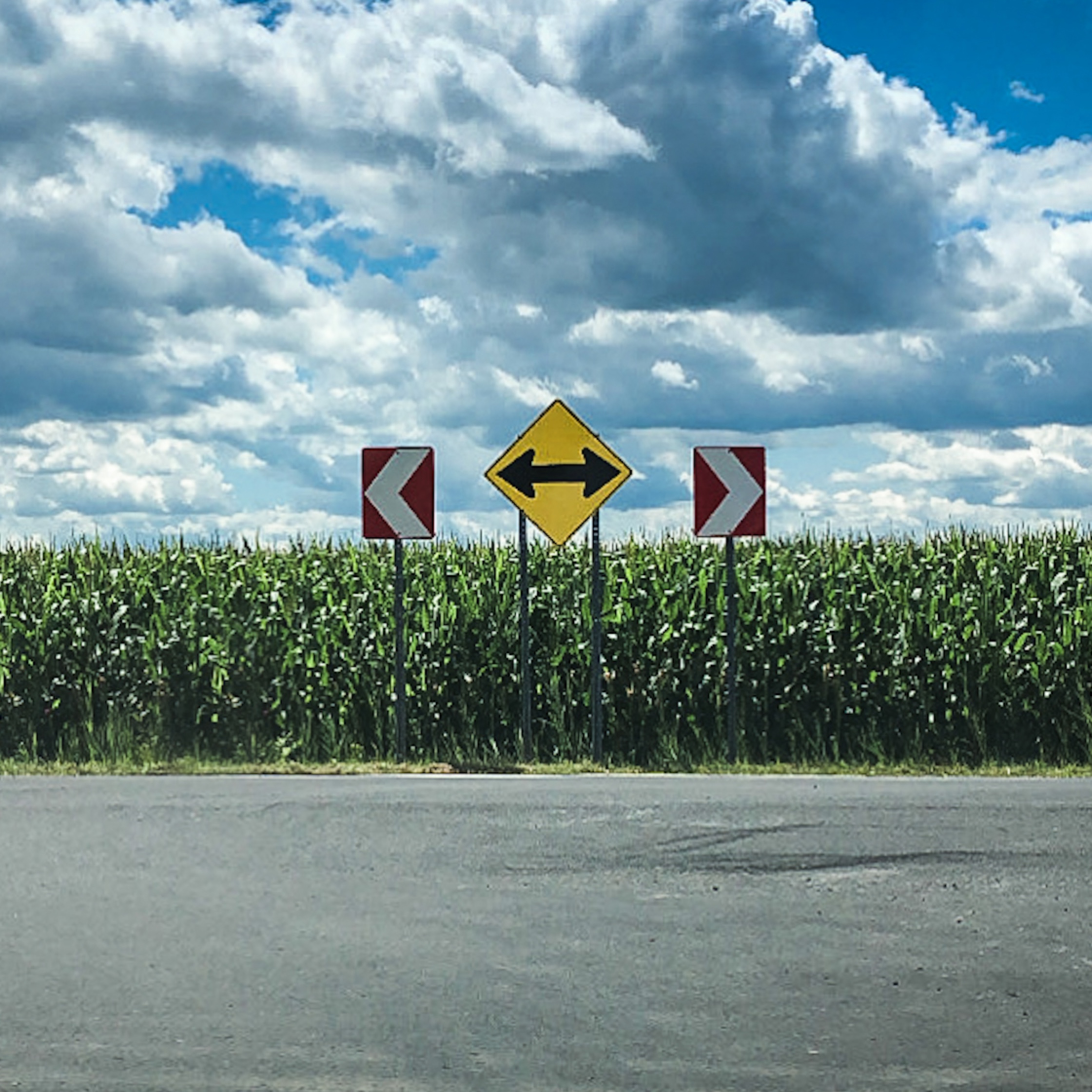
Change rarely arrives all at once. It builds quietly—inside us, around us—until the old story can no longer carry the weight. Forked explores those moments of reckoning, where individuals and societies face the choice to continue as we are, or step into something new. These are the stories of the forks in the road, and the transformations that follow.
Follow me on Instagram! https://www.instagram.com/seanchrislewis/
Episodes
Sep 13, 2020
Sep 13, 2020
50 min
When we think of climate change, it conjures images of industrial smokestacks and bumper to bumper traffic, all spewing toxic emissions into the environment. Perhaps we see a jet take off down the runway leaving billowing black exhaust in its trail. It’s not likely that we look below our feet at the soil and imagine that it could be one of the greatest makers or breakers in the challenge of turning the tides of climate change.
This week we’re speaking with Ananda Fitzsimmons, the president of the board of directors for Regeneration Canada. I’m this episode we discuss:
- The mission of Regeneration Canada to educate and raise awareness about the importance of soil regeneration as a critical climate change solution.
- Soil as being host to a vast community of microorganisms that are the primary creators of soil fertility.
- Farming techniques that harm the microorganisms in the soil and significantly reduce soil fertility.
- Tilling soil as a major contributor to releasing carbon back into the atmosphere and destroying the microorganisms in the soil.
- The carbon footprint of agriculture.
- The principles of regenerative agriculture.
- The need to simplify labeling so consumers can know under what conditions their food was produced: regeneratively or in a degenerative manner?
- Is the Canadian government doing enough to help farmers transition to regenerative farming?
- Farmers For Climate Solutions as an organization committed to lobbying the Canadian government to support farmers and regenerative agriculture.
- The cycle of debris that settles on the earth surface and the importance of not filling debris into the soil.
- How to make farming more profitable by transitioning to regenerative farming.
- Large companies finding investing into regenerative farming as a means to build a more conscientious brand.
- The emergence of certifications on labels to show that a product has been regeneratively produced.
- Organic labels as not evidence of regenerative methods of growing.
- The controversy around the use of Glyphosate on our crops in Canada.
- The need for immediate action toward climate activism and change. This is not a time for slow change.
You can connect or support Regeneration Canada at:
Aug 22, 2020
Aug 22, 2020
44 min
Erik Chevrier is an accomplished professor, researcher, and social activist. He’s a PhD candidate, specializing in subjects such as, food and culture, political economy of inequality, community and local activism, and food sustainability; to name a few.
In this episode we discuss:
- the importance of our imagination and seeing what kind of future we want to create.
- How we need to dispel myths in our beliefs of what we’ve been taught about the world. Such as, agriculture does not have to be mechanized and large industrial farms do not necessarily feed the world.
- Our present agricultural methods are destroying our planet.
- Erik explains the concept of “carbon sinks” and carbon extraction from the air.
- How reconnecting with our food through gardening and cooking, helps us to build deeper awareness of our responsibility to our planet.
- Small plot intensive farming and how we can produce a significant amount of food on a small piece of land.
- Urban agriculture as a real model to produce food.
- Building local communities through changing models of agriculture.
- In order to solve our current crisis we need to look beyond our present “for profit” way of producing food. Prioritizing community over profit.
- The consumer mentality and how to curtail the behaviour in a way that moves away from over consumption.
- The myth that food is cheap. In actuality we have cheap food due to the poor work conditions and pay to migrant labourers. The true cost of food is far higher.
- How our capitalist system is set up to require continuous consumption.
- The need to change our politics and have citizens more involved in their local communities and catalyze change locally as a start.
- Beliefs need to change but helping an individual to recognize that their beliefs need to be modified is no easy task.
- When our beliefs are challenged we can sometimes become irrational in the defence of them.
- Introducing people to ways of seeing different dietary practices in a less intimidating way.
- Even though slow change in our industry practices seems like an accessible way forward, we must recognize that change actually needs to be done now and absolutely.
You can connect with Erik on Facebook https://www.facebook.com/erik.chevrier
Aug 9, 2020
Aug 9, 2020
51 min
We live in a time where so many things are made to be complicated. From exercise and nutrition, to just simply rediscovering our primal connection to our environment. Non of this needs to be made complicated and it is all in fact, simple.
Taylor Thompson is a health and lifestyle coach. He’s a community builder and brings people together around the theme of teaching us to get more in touch with our natural movements, friendships, and introspection as our key practices for a meaningful life.
In this episode we discuss:
- The beginnings of Taylor’s Instagram handle wildmanpt.
- Taylor shares the story of his outdoor lifestyle in his younger years on the Island of Kawaii.
- Community rebuilding from the Covid disruption.
- Community as a cornerstone to rebuilding our health and wellness.
- The importance of building a tribe of people who learn and grow together.
- Strategies people can begin to implement in order to elevate their health consciousness.
- The importance of journaling.
- Gratitude as a way to set the stage for a great day.
- Bioenergetics to address emotional trauma or just to simply to change our state of mind.
- Taylor shares his past experience as a power lifter and injuries that he suffered during the sport.
- The importance of finding a place to consistently get our workouts in no matter what time of year it may be or whether or not we have a gym.
- Staying fit working out from home.
- Seeing past the temptations in life and staying on track with our goals.
- The importance of patience on the path to better health.
- Taylor’s nutrition practice.
You can connect with Taylor on Instagram:
Aug 2, 2020
Aug 2, 2020
47 min
As we arrive to the middle of summer, the Covid disruption and quarantine seems so far away. We can’t help but think to the months ahead and hope that we don’t revisit the circumstances of early 2020. Whatever the future may hold, we as individuals can challenge ourselves to see our situation as an opportunity to change. As we look to industries and governments to take on the responsibility to adopt more sustainable practices, we as well must take on the challenge to change our lives.
Chase Tucker is an outdoor adventurer, YouTube movie creator, and ultra athlete. He shares his beliefs and practices during the Covid quarantine and lifestyle advise to help us to recapture our sense of adventure.
In this episode we discuss:
- The importance of following up with people who show interest in our online brand. Structuring our online business in a way that allows us to be interactive with followers.
- The second wave of Covid-19 in Spain.
- Chase shares how the quarantine impacted his training and preparation for ultra events.
- We can continue to work on our conditioning with at home training. It may not be as motivating but we can remain fit while being in quarantine .
- Managing online business while taking extended days off to compete in events.
- The importance of having big goals to keep us engaged in our objectives.
- When we are people who chase goals, we can become better people and transmit that to others.
- The importance of mental toughness. Overcoming fear as the main block to our success.
- Daily journaling as a method to work on self improvement.
- The importance of devoting time to our personal development each day.
- Making life decisions based on our values and not always be money motivated.
- Discussion on Chases youtube video “When all this passes.” Link to video below in the show notes.
- Chase offers advise on mindset shift, should we go into a second wave of quarantine this fall.
- Nutrition, longevity, and radicalized attitudes toward what we eat.
6 PRACTICAL WAYS TO BUILD MENTAL STRENGTH FOR THE MOUNTAINS
https://basecamptraining.com.au/2020/01/30/mental-strength-for-the-mountains/
When all this passes what will be different?
Website:
https://www.basecamptraining.com.au
YouTube:
: https://www.youtube.com/c/ChaseMountains
Instagram:
https://instagram.com/chase_mountains?
Jul 23, 2020
Jul 23, 2020
50 min
Self reinvention never looks the way we imagine it to be. It often is required in times when we least expect it. If we can look past the stress of it and imagine something better for our lives, we can at least work in the direction for something new and maybe even better for ourselves.
As the Covid disruption continues to push us to adapt, many of us have found ourselves having to practice our physical fitness in unfamiliar ways. Coach Anissa Marcanio is a fitness and health coach,
In this episode we discuss:
- Online entrepreneurship in the fitness industry.
- The importance of reflecting our most sincere self online.
- The challenge for personal trainers to find their place in the online training world.
- Defining what “making it” means in our business.
- Instagram influencer content vs true exercise instruction content.
- Learning to be aware of our body and how it moves naturally.
- Natural outdoor body movements vs the movements performed in a gym.
- Women and learning to lift weights and not fearing weight bearing exercises.
- Building our own “second wave” through transforming our health and fitness.
- Are you self caring or self avoiding?
You can connect with Anissa on Instagram:
Jul 5, 2020
Jul 5, 2020
42 min
As society slowly returns to activity, there is no denying that our conversations among one another have changed. Covid-19 has awakened us and brought to light fragilities in our current system. Though we have demonstrated our ability to transform many of the ways in which we conduct business, we see more clearly the elements of society that we must work harder on. One of the most pressing issues that demands our attention is the significantly large portion of the population that is not in good health.
Remote indigenous populations are among those who suffer most from health inequality. It is imperative that we acknowledge that these populations represent the failure of our system to foster diversity and support communities far from urban centres. Indigenous people live closest to the natural environment and therefore are most impacted by the deterioration of our ecosystem and poor government polocies. Diversity is our only safeguard for the future of our planet and should we fail to recognize the urgency to reestablish the health of these remote communities, we risk failing our planet.
This weeks guest is Dr. Bernard Reid. He is a family care practitioner in North Eastern Canada. He shares his learning experience and insights into working with these unique remote communities.
In this episode we discuss:
- The Waskaganish region in Northern Quebec where Bernard practices as a doctor in family medicine.
- Waskaganish is a very rural region that poses very unique challenges to practice medicine.
- Bernard describes the diverse medical conditions that present daily in his clinic.
- Urban settings verses rural settings and how they differ in a family medical practice.
- Bernard acknowledges the challenges of being thrust into this rural setting and dealing with such a variety of medical conditions after only 2 years internship.
- We discuss the incredibly steep learning curve in the first year of a medical practice.
- Bernard’s passion for the unique challenges that come with practicing family medicine in a remote region.
- The unique challenges the region had to face with Covid-19.
- The health status of the indigenous people in the James Bay region.
- The rates of chronic diseases among indigenous people. Very high rates of obesity, diabetes, chronic kidney disease, and coronary heart disease.
- The major challenges of health inequality.
- Our imperative to respect and embrace cultural diversity as an absolute requirement to safeguard our planets future.
- The systematic destruction by Western practices to destroy the indigenous way of life.
- The root cause of many of our cultural problems is the disregard for the indigenous people through colonial practices.
Jun 23, 2020
Jun 23, 2020
37 min
As covid sent the vast majority of our population into sequestration, many of us found ourselves taking the time to see the world through different lenses. Many of the fragilities of our systems were and still are being revealed. This novel corona virus is convincingly demonstrating that there are large portions of our population who’s health are needlessly in serious jeopardy. It doesn’t take much inquiry to understand that inequality is a major driver for poor physical and mental health.
Health inequality is a serious local and global problem that must get resolved. We need to come to a place of agreement where we acknowledge that though we may never see a perfect world of equality, we must make it that every individual is at least provided the tools and opportunity to pursue personal health and well being.
Coach Kristal Lollis is a health and wellness coach and cofounder of Tribe Fitness in Salem North Carolina.
In this episode we discuss:
- The challenges of urban food deserts.
- How poverty and deep inequality creates an environment that makes practicing a healthy lifestyle almost impossible.
- The issues around people not having resources to practice health and fitness.
- When we don’t have healthy role models in our lives it makes it more unlikely that we will be healthy.
- Scarcity is overwhelming on an individual and makes it very difficult to put their focus on additional priorities, such as fitness and healthy eating.
- Communities where all of the local population live with scarce resources, are highly likely to suffer with lifestyle related illness.
You can connect with Kristal on instagram:
https://www.instagram.com/coachmekris/
May 26, 2020
May 26, 2020
35 min
During these times of sequestration, many of us have found ourselves in contemplation about our health, fitness, and what we would like to change in our lives. With a deep sense that the world is changing and certainly our hopes that the world will in fact change, we don’t want to miss this opportunity to challenge ourselves to change with it.
This is our 3rd part of our conversation with coaches Julia Balit and Nathan Zentner. We go deep in this discussion and explore the very controversial questions of the individual taking accountability for their personal well being.
In this episode we discuss:
- let’s take action on our health today and not wait for something to go wrong before we start.
- When we wait to make changes in our health practices, we have to take more drastic measures to improve our wellbeing.
- Being fit and healthy takes effort and energy.
- We acknowledge that there are some people living in scarcity and practicing health and fitness is almost impossible for them due to lack of resources.
- We look at reasons people claim as to why they don’t exercise.
- Why we should not be so quick to claim to be a specific body type. Adhering to principals of fitness will approximate everyone to a fitter body.
- We acknowledge that being underweight and overweight are equally unhealthy.
- Body shaming should never be a reason to have someone exercise.
- The importance of mentally laying the foundation for better health. Start with the mind and the fitness will follow.
- Creating clear, attainable, but challenging goals.
- We also need a very big goal that challenges our behaviour over the long term.
You can connect with Julia on instagram:
https://www.instagram.com/juliabalit/
You can connect with Nathan on instagram:
https://www.instagram.com/zentnernathan/
May 19, 2020
May 19, 2020
26 min
Every individual and industry is at a fork in the road. Our lives have been disrupted with very little notice. These are the covid19 lockdown podcast editions. These are the stories of people, sharing their experience & vision of how we can emerge better.
There is a subtle yet clear shift happening in our world. We all feel that the mistakes that have been made in relation to our planet, can somehow be revisited now and made right. Almost as though we can hit a reset button. It is overwhelming to think on such a large scale to bring about the changes that we all feel must be made to heal ourselves and our planet. Before we can heal our earth, we must reconnect and heal ourselves. Much of our healing must be done though our connection to our food and nutrition. The methods by which we produce food is presently broken. Our methods of farming are unsustainable and the health of our population is at risk due to chemical farming and depleted nutrients in our soils. The good news is that we can change this, and there are people like Erik Chevrier, who are inspiring many people to reconnect with their food and health. There is a new food revolution taking place, bringing food production locally, and maybe even in our own backyard.
Erik Chevrier is an accomplished professor, researcher, and social activist. He’s a PhD candidate, specializing in subjects such as, food and culture, political economy of inequality, community and local activism, and food sustainability; to name a few.
In this episode we discuss:
- The health benefits of natural whole food and how gardening benefits our physical and mental health.
- Collective gardens as a means to build communities.
- The myth that we need huge farms and large industries to feed the population. Much of the world is fed by small farms.
- Lack of biodiversity in our farming practices puts our food supply at risk.
- I ask Erik why biodiversity is so important.
- Agroecology as a cornerstone to sustainable farming practices to free us from GMO’s and chemical farming.
- Many large companies such as Cargill are major contributors to deforestation in order to make way for crops to feed livestock.
- The food industry can seem so big that we become lost in how to take charge of our relationship with food.
- Erik gives us ideas of how to get started with building a better relationship with food.
- We explore the topics of community sponsored agriculture, and supporting our local food networks.
You can connect with Erik on Facebook
https://www.facebook.com/erik.chevrier
or visit his website:
May 11, 2020
May 11, 2020
28 min
Every individual and industry is at a fork in the road. Our lives have been disrupted with very little notice. These are the covid19 lockdown podcast editions. These are the stories of people, sharing their experience & vision of how we can emerge better.
This is part 2 of our discussion with fitness coaches, Julia Balit and Nathan Zentner.
In this episode we discuss:
- This fit/sick curve. This is a theory that proposes that, our fitness will inevitably help us to shorten sickness times and withstand illness better than those who are not fit.
- The importance of maximizing our fitness in current times.
- When we don’t know where to start in our health journey, the best thing to do is to start taking control of the things in our life that we have some control over.
- How to keep our mindset focused on goal attainment.
- Action is what builds our motivation. We need to get into action to get motivated.
- Will power and how to harness it to get into action.
- To just get moving and the endorphins kick in quickly to keep us moving.
- Motivation through accountability partners.
- Having a huge goal is the best way to keep us focused on success.
- Work hard, be patient, and consistency will come.
- To have the taste of a win is critical to elevating our belief that we are capable of winning.
- The importance of personal development.
You can connect with Nathan on instagram
https://www.instagram.com/zentnernathan/
You can connect with Julia on instagram:
https://www.instagram.com/juliabalit/